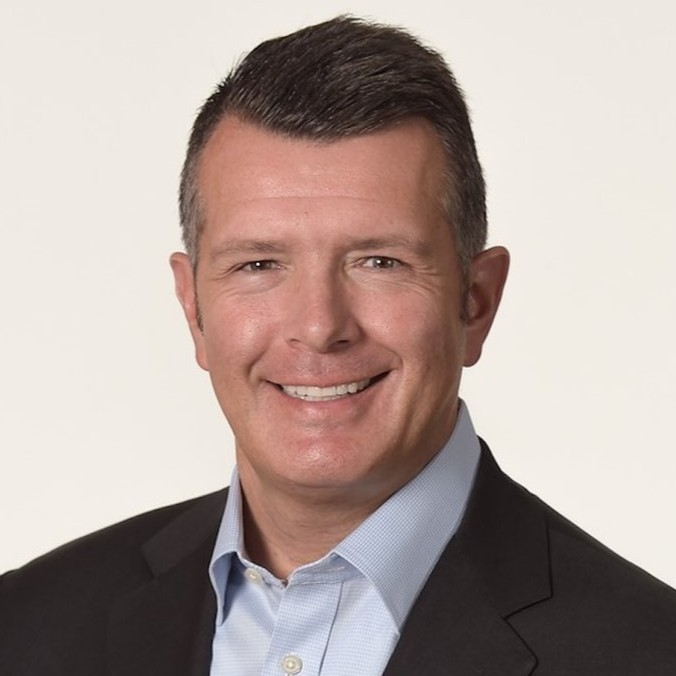
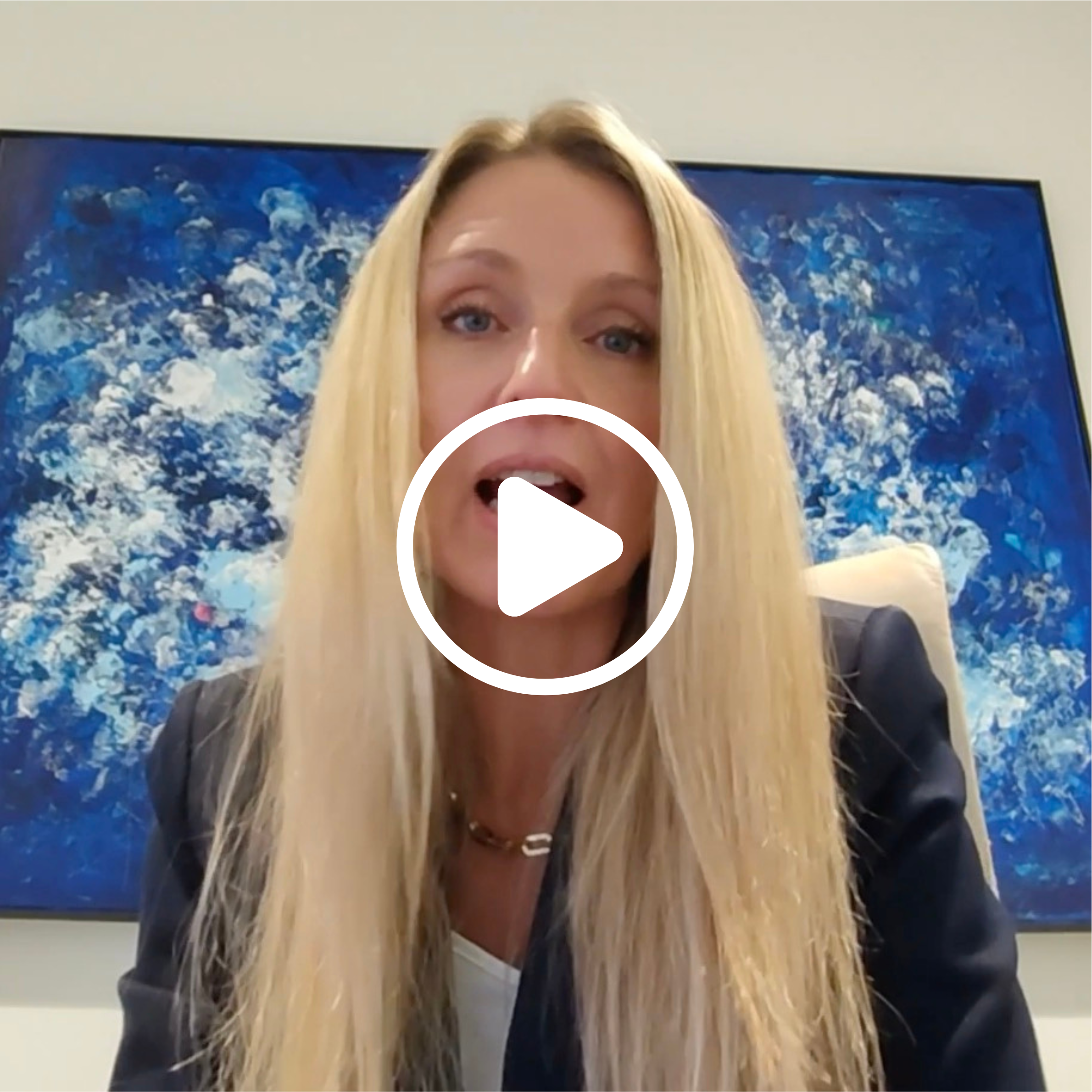
On the sidelines of IPEM Global, Private Equity Wire® caught up with Ridgepost Capital CEO Luke Sarsfield to discuss the appeal of the mid-market, AI implementation and the challenges of democratisation.
By Jack Arrowsmith, Paris
The mid-market is having a bit of a moment.
As both public and private markets grapple with the instability of a changing world economy, investors are looking for the market segment which will insulate them from instability. In the private capital world, many believe that is the mid-market.
Someone who knows a thing or two about this segment is Luke Sarsfield, CEO of the mid-market platform Ridgepost Capital. In its Q2 results the firm, formerly known as P10 Inc., reported that it had surpassed $50bn in assets under management.
Speaking to Private Equity Wire® at IPEM Global, the former co-head of Goldman Sachs Asset Management was cautious not to overplay the mid-market’s resilience to disruption: “I don’t think anything is immune. But I think there can be some inoculating effects.”
What it offers, he says, is a “margin of safety” for investors. Lower competition and greater choice mean GPs can be more selective in their investments, and buy assets with lower leverage.
Then when it comes to value creation, investors can take advantage of the low-hanging fruit at founder-led businesses, in order to deliver strong results.
Equally important for an industry facing a valuation correction is the ability to exit an asset on favourable terms.
“In the upper part of the market if you have a very large asset, you have a limited number of strategic buyers,” he says, adding that public market receptivity has previously been a challenge.
“In our part of the market there’s a much broader range of financial buyers.”
For Sarsfield it’s this optionality that really makes the mid-market resilient, instead of any sense that it avoids cyclical industries such as tech. Fears of concentration risk have sparked debate about whether managers should diversify away from AI, and any adjacent industries.
“My guess is, on average, the composition by sector… doesn’t look massively different than in the upper part of the market,” he says.
AI’s scale divide
While technological change has the power to disrupt portfolios, it can also be used to enhance firm operations.
The private capital industry is increasingly turning to partnerships with some of the leading AI companies in order to deploy this technology, both at the firm level and in their portfolios.
In August Clearlake announced a strategic partnership with OpenAI to work on portfolio-level AI application. Blackstone and Hellman & Friedman have also been busy, partnering with Anthropic to launch AI services company Ode, which will support their portfolio companies.
While AI can generate meaningful efficiency gains, it also means models interacting with extremely sensitive data. For many firms, the value of that data is now a major part of their offering to their investors.
Sarsfield describes the firm’s mid-market data for the US and Western Europe as “one of the most comprehensive data sets… of anybody on the planet”.
Could that advantage be under threat? Sarsfield says that to allay these concerns, the firm has negotiated agreements with some of the major AI companies to ensure that “our data is protected and it stays within our walls”.
While this is achievable for large platforms, smaller firms may find they lack the resources to negotiate these customised agreements, meaning they would be forced to rely on off-the-shelf models. Inputting sensitive data into these tools may prove too much of a risk, especially when the industry is facing mounting cyber threats.
The summer saw a series of phishing attacks against major private capital firms, with Apollo being the most high-profile victim. The firm reported in August that a social engineering scam had led to breaches of information including names, dates of birth, home addresses and social security numbers.
Because of these security concerns, Sarsfield says AI application could become “an increasing case of haves and have nots”, with smaller firms unable to secure the necessary protections to fully utilise AI, and unwilling to put sensitive data at risk.
Democratisation’s report card
The democratisation of private markets is another area where the industry is undergoing structural change. The private wealth channel currently makes up 36 per cent of Ridgepost’s LP base.
While the majority of the firm’s offering is in traditional closed-ended funds, it operates some evergreen strategies, notably through its subsidiary Enhanced Capital.
“People talk about wealth, sometimes, as if it is a monolithic channel,” Sarsfield says, arguing that different segments of private wealth won’t necessarily behave in the same way.
Mass-affluent investors “may not have the depth of expertise and experience that a very sophisticated family office has”.
When faced with a market disruption, less sophisticated investors may be more inclined to react spontaneously. Family offices, on the other hand, are better experienced at allocating through cycles.
These differences could be compounded by nature of their relationship with the alternative asset manager, Sarsfield adds.
While a family office is often dealing directly with the manager, a mass-affluent investor may have to navigate a chain that includes multiple intermediaries, before they actually reach the GP.
“In any chain of communication, things can get diluted,” he says. This is especially the case during a crisis: by possessing a direct line to the manager, a family office can get context and answers which aren’t as easily accessible for individuals. Without this information, individual investors could be more inclined to redeem.
And the challenge of investor psychology has been compounded by the way in which evergreen funds were pitched to wealth clients.
Sarsfield is critical of the industry’s use of ‘semi-liquid’ to market evergreens. “I think it’s a poor choice of terminology,” he says.
“If you said to somebody, I’m going to offer you semi-liquidity, they have a mental construct of what that means. I’m not sure what that means is 5% per quarter.”
With the semi-liquid expectation in mind, wealth investors could see gates as a sign of trouble, not the fund working according to plan. This would help to drive up investor withdrawals, which build into a cycle.
That cycle is part of the broader instability across private markets, which are facing disruption both internally and externally.
Some view the mid-market as resistant to them, but for Sarsfield that’s not the point. Instability will hit it just like everywhere else, the difference is that it’s better equipped to handle the blows.