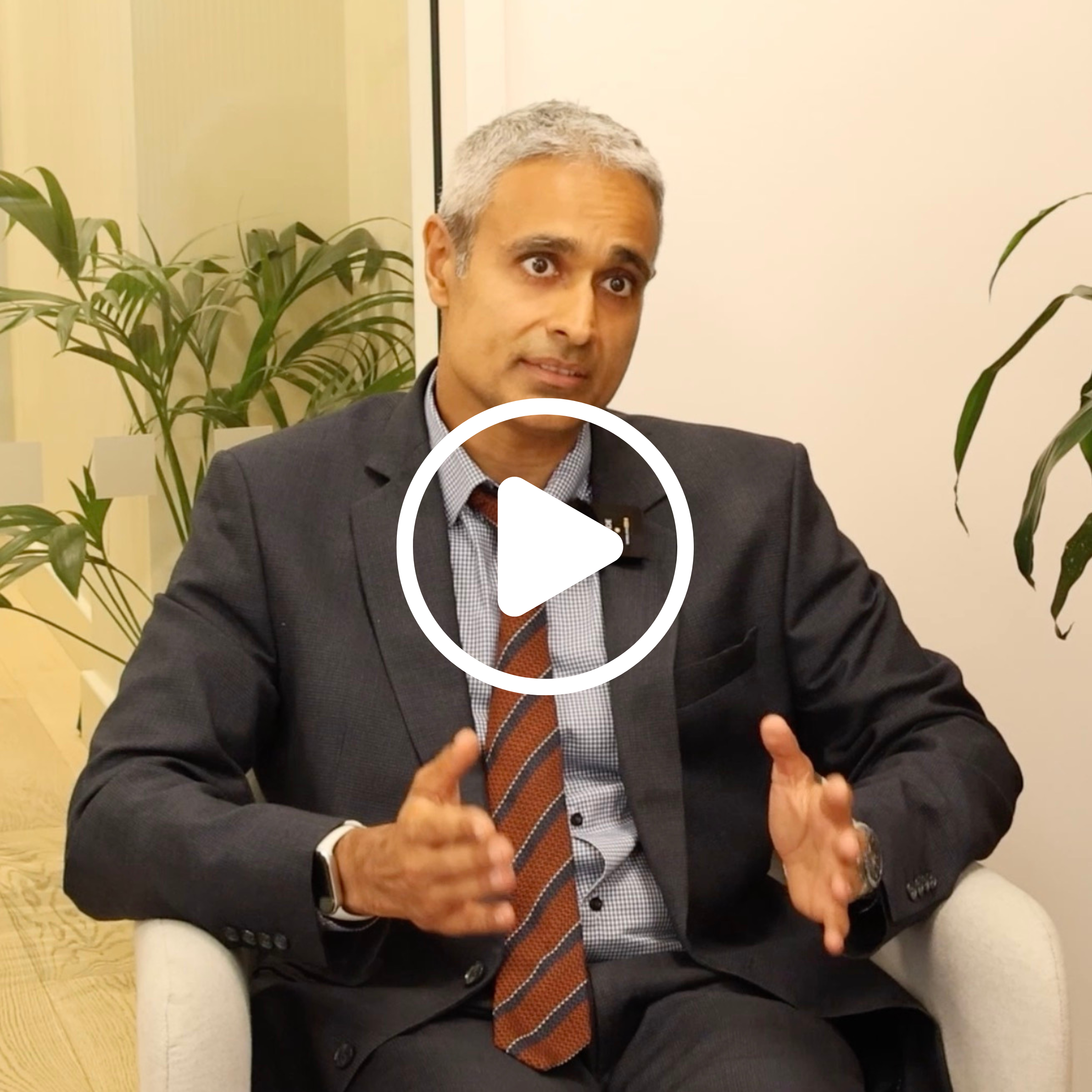
Speaking to members of the advisory board of consultancy firm The Foundation this week, Simon Walker, chief executive of the British Venture Capital and Private Equity Association, set out
Speaking to members of the advisory board of consultancy firm The Foundation this week, Simon Walker, chief executive of the British Venture Capital and Private Equity Association, set out how the private equity industry could help in the recovery of the recession hit UK economy. This is an abridged and slightly edited version of his remarks.
My main job since becoming chief executive of the BVCA has been to help people think differently about private equity. We need to see private equity for what it is. It’s not perfect, it’s certainly not infallible. Like any other business model, it sometimes makes rotten decisions. Some firms are more successful than others. And in the months ahead, companies backed by private equity will fail – just like publicly-owned companies.
But taken as a whole, private equity provides many of the things we need to make our business sector and our economy more successful and productive. That is more true than ever when you think about the problems we face today.
Let’s just think what we are going to need to get the economy growing again:
• Liquidity – cash – to get the wheels of commerce turning again and people prepared to invest.
• Long-term attitudes towards investment and an end to the short-termism that has contributed to the current crisis.
• The ability to repair broken or languishing businesses.
• New business start-ups because they are good at creating jobs.
• Clever research being spun out of universities and turned into viable, fast-growing businesses – the growth industries of the future.
• Increased productivity and the ability for UK businesses to compete effectively in international markets.
and lastly
• To rebuild shattered pension pots by generating strong returns for pension funds.
So how does private equity and venture capital measure up? First, it is sitting on cash. Despite the credit crunch, global funds raised more than USD320bn in the first half of 2008. That money is waiting to be invested – in a world where cash is in desperately short supply and where banks won’t lend.
As David Rubenstein, the founder of Carlyle, says, this could turn out to be one of private equity’s finest hours. Investing at the bottom of the market is something the private equity industry has done through other downturns. It should lead to decent returns for investors in due course.
Secondly, venture capital and private equity are long-term investors. Compare this with investors in public companies, who are constantly looking for short-term returns. Private equity typically stays invested for five or six years and often longer. In other words, private equity offers an antidote to the short-termism that has contributed to the current problem.
Thirdly, private equity will have an important part to play in the recovery because it invests right across the economy, from university start-ups, to growing businesses looking to expand into new markets, to big household names that have lost their way. As big corporates focus on their strengths during the recession, non-core businesses will be hived off. Those divestitures will need financial backers.
Private equity brings the disciplines that are needed to fix broken businesses – focus, toughness, experience and alignment of interest: big rewards for success when cash is actually returned to investors, but no rewards for failure – unlike many public companies.
Fourthly, because private equity has a proven track record at generating superior returns across the economic cycle, pension funds will need it more than ever after the savaging they have suffered in recent months.
How different are market conditions now compared with, say, 18 months ago when we were seeing huge deals like KKR’s takeover of Boots? The short answer is totally. Those big deals have evaporated with the credit crunch.
The value of the buyout market halved from the first half of 2007 to the first half of 2008 – figures that don’t capture the dreadful past few months. The total number of buyouts hit a 15-year low in the first half of 2008. The top four deals ranged from Emap at GBP2bn to Northgate Information Systems at GBP500m, a different league from KKR’s more than GBP11bn for Boots. The mid-market has also shown a sharp downturn as deals in the GBP100m-GBP500m range fell dramatically.
Private equity is having to focus back on driving operational efficiency into its portfolio companies. That is no bad thing. There is some truth in the accusation that in recent years, with the availability of easy credit, private equity has maybe got a bit lazy.
With people falling over themselves to lend and to get a piece of the private equity action, the role of leverage became increasingly important. That has all changed. People in private equity will prove their worth – or not – by delivering hard-won operational improvements and not clever financial engineering.
Private equity is already demonstrating that it can adapt to these new conditions. Firms are having to be more creative to get deals done. For example, the Leeds-based turnaround investor Endless Private Equity acquired Crown Paints in an all-cash takeover, saving nearly six hundred jobs in Darwin, a place where jobs aren’t easy to find.
What these tougher times will also reveal is whether private equity really does make a difference by bringing management know-how to the table, or whether, as its critics claim, it is simply stuffed full of people who have brilliant degrees in maths, know how to do clever financial modelling, but don’t actually know how to run a business.
That isn’t a criticism you could level against Clive Hollick at KKR. Before coming into private equity, he built up United Business Media over a 20-year period. Most of Terra Firma’s senior players have come into private equity with a strong background in hands-on management, running businesses such as Scottish Power, Stagecoach or Allied Domecq.
Liam Strong at Cerberus ran Sears. Rick Haythornthwaite struggled successfully to restore Invensys to corporate life. Tim Parker, the so-called Prince of Darkness, has run AA, Kwik-Fit and Clarks.
Clearly the proof of the pudding will be in the eating over the next couple of years for private equity. I don’t expect everyone to do equally well. There will be failures. But I do expect private equity to make a huge contribution to fixing the economy and making businesses profitable.
I have one caveat, that government and regulators mustn’t mess things up, by too much taxation or too much regulation. I hope the British government does not rush to judgement. As a believer in free markets, I can’t resist pointing out that the real problems came from the most regulated sectors of the economy.
That said, greater openness is an important theme for private equity, which is why over the past year we’ve introduced far greater transparency through the Walker Report, which we will continue to roll out in the months ahead.
But overall, if we avoid these pitfalls, the role of private equity in our economy will continue to grow. In fact, we will need it more than ever: its cash, its flexibility, its management, and its focus to help get the economy moving again.
Private equity is far from perfect in every respect. There will be failures, some of them big ones. But when you look at what it is good at – fixing broken businesses and helping businesses to expand and become more profitable – I am certain that it has an important part in putting us back on the path of growth.