PARTNER CONTENT
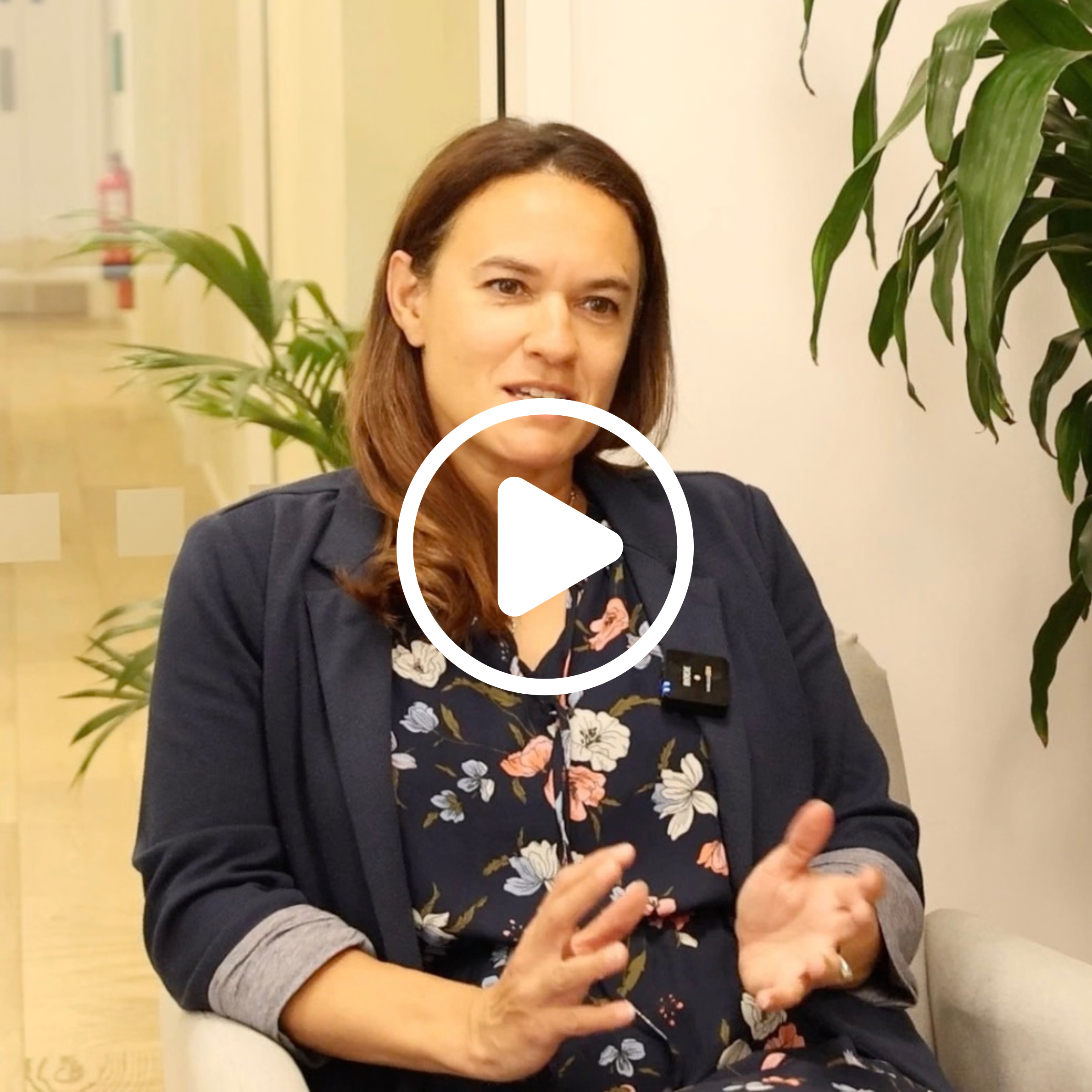
At Resource Partners, winner of the ESG Fund of the Year: Emerging Markets A award at the Private Equity Wire ESG AAA Global Awards 2024, good business and social responsibility are regarded as two sides of the same coin. Co-Founder and Managing Partner Malgorzata Bobrowska chats to us about some of the major challenges and risks in the ESG landscape and how the firm and its portfolio companies make ESG a key component of their business objectives…
What are the biggest challenges currently dominating in the ESG landscape?
One of the main challenges in the current ESG landscape lies in the outdated mindset of prioritising quick investment gains, which not only undermines the opportunity to build a long-lasting competitive advantage, but also neglects the broader, long-term impact of investments on environmental and social factors.
Compounding this issue is the still-low awareness of ESG benefits, particularly among SMEs and private owners with many perceiving ESG as a bureaucratic burden, and failing to recognise its potential to drive faster growth through higher employee engagement and enhanced company reputation.
Although intense and sometimes difficult to manage, the fast-paced changes needed to align with global ESG goals are paving the way for better clarity, stronger frameworks, and more streamlined processes.
The collection, analysis, and verification of high-quality ESG data is another major challenge. Without clear benchmarks and standardised regulations, businesses find it difficult to track and demonstrate meaningful improvements in their ESG performance, with many struggling to obtain reliable data, particularly on their environmental and social impacts across global supply chains. Additionally, ESG metrics tend to be qualitative, making it challenging to quantify and measure progress.
How is your firm coping with these challenges?
Building socially and environmentally conscious companies is fully compatible with our core business objective of creating long-term value for our investors. In line with industry best practices and global standards, our annual reporting covers a wide range of topics, from environmental impact and social responsibility to corporate governance.
In our portfolio work, we establish dedicated ESG teams within each portfolio company, assigning clear responsibility to management. We also set “green KPIs” for our portfolio companies, which not only encourage them to adopt a more deliberate approach to measuring ESG progress, but also motivate management through a system of performance-related internal awards and bonuses. Routine audits of ESG initiatives enable us to pinpoint problem areas and make necessary strategy adjustments.
Our internal standards and ESG policies are closely aligned with those of our external partners, ensuring that each investment process follows consistent ESG benchmarks. As participants in the United Nations Principles for Responsible Investment (UNPRI), we also coordinate our actions with international standards and support the development of useful benchmarks and data collection. We are active members of the Polish Private Equity and Venture Capital Association and ROPEA, both of which collaborate with broader European initiatives aimed at standardising ESG regulations and reporting.
Measuring ESG results from the outset, and not shying away from what the data reveals, is critical, and ensures that the data we collect is credible and valuable for future use. Standardised ESG monitoring is still in its early stages, but by embracing mistakes as opportunities to improve, we are setting the future foundation for more robust ESG standards.
For example, in terms of carbon footprint measurement, rather than focusing on the end result, companies should begin by evaluating where they currently stand and continuously monitor both improvements and setbacks, a proactive approach to data collection and analysis that will facilitate a more transparent and accountable ESG landscape.
In terms of shifting focus from quick gains to slower, more deliberate value creation, we prioritise transparency in risk assessment and progress monitoring. Understanding a product or service’s entire lifecycle allows us to guarantee ethical standards, enhance quality, and give it a competitive advantage. Additionally, greater knowledge, allows us to react to more quickly to unanticipated events, including pandemics, and conflicts as well as ongoing global concerns such as climate change.
While existing EU regulations mainly target larger players, smaller companies can be impacted by supply chain effects including the requirement to collect data on suppliers, workplaces, and human rights policies. Early adoption of ESG into a main strategy will give companies a competitive advantage.
What strategies or initiatives do you have in place to promote diversity and inclusion within your firm and portfolio?
Promoting diversity and inclusion is one of the core aspect of our operations, with a particular focus on supporting women in the private equity (PE) sector. Our fund currently employs more women than men, and I am currently the only one female investment Managing Partner of a Polish PE firm.
I also serve as the President of PSIK, the Polish Private Equity & Venture Capital Association, and is a co-founder of the Polish chapter, which subsequently became CEE Hub, of Level 20, an NGO that advances gender diversity within the PE industry, .
Our portfolio companies also share this commitment to diversity, with, for example, 55% management positions at tech company Deeper being held by female employees.
What strategies or initiatives do you have in place to promote environmental sustainability within your firm and portfolio?
One of our first major goals has been the measurement of our carbon footprint, which began with Scope 1 and 2 emissions and is now moving on to the more complex Scope 3, allowing us to monitor and manage emissions on an ongoing basis.
We initially focus on the internal reduction of emissions, using our portfolio companies ’ own resources, before considering offset measures. We also encourage portfolio companies to engage in environmental and charitable initiatives, while assessing the origin and standards of materials used in production, is another key focus.
All portfolio companies are encouraged to switch to renewable energy sources such as solar and wind power, and target efficiency in energy and water consumption, including minimising waste and resource use. Additionally, we promote the use of more environmentally friendly or recyclable packaging.
We have set ambitious net-zero targets as part of our long-term sustainability strategy, aiming for our second fund to reach net-zero by 2030 and our third by 2035, in alignment with the Paris Agreement. We also made a pledge with the EBRD to proceed with €10m of green investments though our portfolio.
What are the biggest risk considerations in the ESG space at the moment?
So-called “greenwashing” is a big risk in the ESG field, with some companies tempted to overplay their ESG efforts in response to increased demand for sustainable and socially responsible practices.
While the EU is aiming to standardise ESG reporting and impose heavy penalties for non-compliance – which will help eliminate ESG marketing that lacks substance and shift the focus to transparent, data-driven practices – greenwashing remains a problem, particularly in the way it undermines confidence in genuine initiatives and fosters scepticism about ESG in general.
With investors, regulators, and consumers increasingly wary of companies using ESG as a marketing tool rather than a commitment to real change, scrutiny is growing and organisations must back their claims with genuine actions and measurable results.
 Malgorzata Bobrowska, Co-Founder and Managing Partner, Resource Partners – Malgorzata joined The Carlyle Group in 2008, where she was responsible for transactions in consumer products, retail and manufacturing. Prior to that she was a Project Director in the International Expansion department of the largest Polish insurance company, PZU. She also worked as a consultant for McKinsey & Co. in Chicago and Warsaw. Małgorzata has been the President the Board of the Polish Private Equity and Venture Capital Association since 2022. She is also a co-leader of Level20 Polish Committee and was honoured with a Person of the Year and Social Business Accelerator Mentor of the Year awards in Nagrody PSIK 2021 (2021 PSIK Awards) organised by the Polish Private Equity and Venture Capital Association. Malgorzata is the Partner responsible for ESG. She graduated from the Warsaw School of Economics and from CEMS (Community of European Management Schools) and holds an MBA from the Kellogg School of Management.