With LP diversification dominating discourse, private equity managers are set to serve many masters with distinct priorities.
Based on Private Equity Wire’s allocator surveys of more than 100 LPs through 2025, here are some factors that wealth managers very clearly prioritise more than the traditional institutional LP base.
In time, we’ll add a range of platforms, including retail, to the mix.
1 The pragmatic and the passionate
Institutions have a mandate, with certain buckets to fill. Private markets have their own earmarked buckets, so it’s a case of providing what institutions need to balance their portfolios. For wealth investors, whether it’s a next-gen pursuit for a greener, more equitable future or an egoistic quest for the next Apple or Amazon – impact of investment matters.
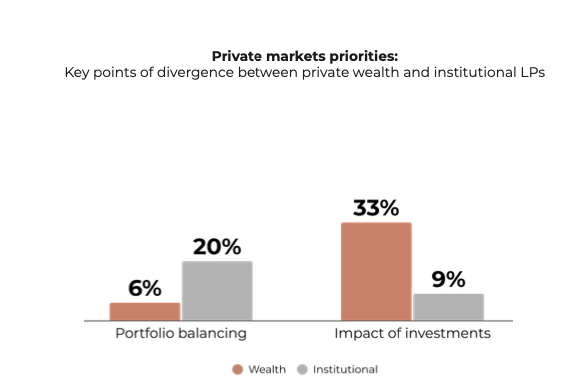
The former spells discipline, the latter signals risk. The former feeds on economics, the latter needs emotion. The former demands a DDQ, the latter seeks an alignment of values.
Managers should build an eclectic investor relations team with qualities ranging from data analytical skills to emotional intelligence. Allocation is no longer a tick-box exercise.
2 The out-of-the-blue allowance
lliquidity is a problem for allocators across the board, but more so for wealth investors. Institutions have been consistently tapping the secondary market to rebalance their portfolios recently, but they have the absorbing power to tide over difficult periods.
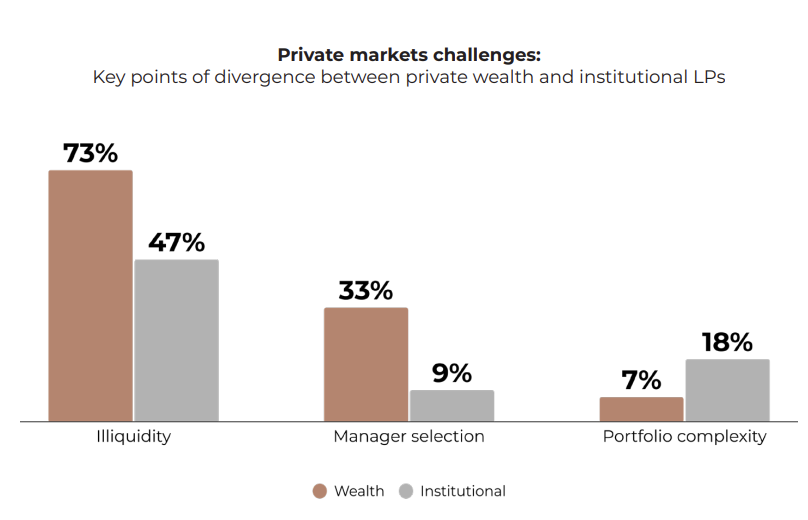
Wealth investors are susceptible to life events, frequently positive but often negative, which necessitate urgent liquidity. Private markets aren’t geared for a quick withdrawal – but they’re on their way.
Other than that, it seems wealth investors choose their managers carefully, but keep things simple thereafter.
3 A taste for specialised and sophisticated
Institutions have established and often repetitive formulas to pick their manager portfolios. Wealth investors are more likely to select carefully and variably each time – based on their own clear values and priorities.
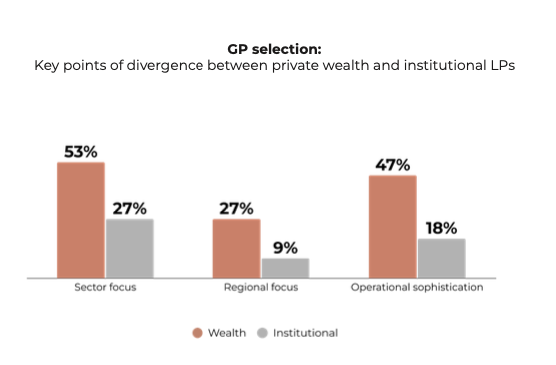
A sectoral or regional focus and the specialist knowledge that comes therein aligns nicely with vision-driven investing. Passion also brings persistence – it’s likely wealth investors will want regular updates on performance, and possibly more granular insight on the why’s and the how’s.
Operational sophistication is key to meeting wealth investors where they are, much like other consumer platforms do.
4 The absence of in-house
Wealth investors struggle more than institutional investors with every operational aspect of their private markets investments – from onboarding to monitoring, from benchmarking to forecasting.
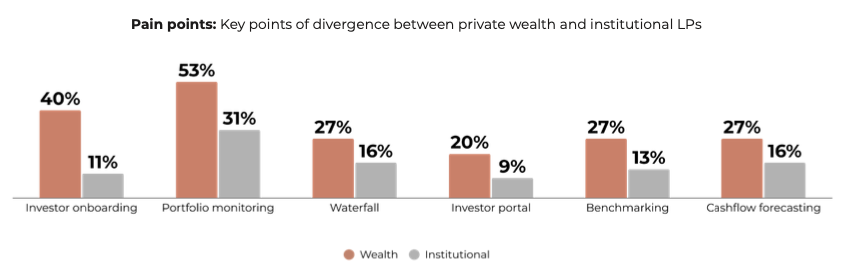
It’s a simple dichotomy – between having a big engine of in-house investment professionals and processes, and working out of a small family office.
An institution will do their own homework and compare notes to scrutinise. A wealth investor will lean more on the managers – a bigger burden on the one hand and a stronger bond on the other.