Eurazeo says it intends to participate in the development of high potential French small and medium enterprises in need of capital with the launch of Eurazeo Croissance.
Eurazeo plans to commit EUR500m over five years in this activity.
It will support SME management teams in the deployment of industrial projects, particularly with regard to the financing and project management.
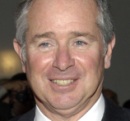
Patrick Sayer (pictured), chairman of Eurazeo’s executive board, says: “We are proud to formally launch Eurazeo Croissance with this first investment in Fonroche, one of tomorrow’s leaders in the development of renewable energy in France. Eurazeo will perform its role
Equity Risk Partners, an insurance brokerage and employee benefits consulting firm focused on the private equity industry, has hired Charles Blackmon as senior principal – executive liability.
Blackmon will join Equity Risk Partners’ Chicago office from Marsh, where he most recently held a vice president position in their financial and professional liability practice.
"We are delighted to have Charles as part of our growing executive liability team," says Michael Marcon, founder and chief executive of Equity Risk Partners. "His experience as a broker, underwriter and client advisor gives him the diverse skill set necessary to add value to our private
The Blackstone Group made a GAAP net loss of USD121m in the first quarter of 2010, an improvement from the net loss of USD232m in the first quarter of 2009.
Economic net income of USD360m in the first quarter of 2010 was up significantly from negative USD82m for the first quarter of 2009.
Net fee related earnings for the first quarter of 2010 were USD99m, up from USD90m for the first quarter of 2009.
Distributable earnings were USD149m, up from USD77m in the first quarter of 2009.
Assets under management totalled USD98.1bn at 31 March 2010, up from USD92.2bn at
Private equity has a vital role to play in unlocking Africa’s potential as a global economic player, a senior Citadel Capital executive told business leaders and government officials at a gathering in Sharm El-Sheikh on Monday.
“The Comesa countries have natural competitive advantages that leading private equity players such as ourselves look to unlock as we link national producers to regional markets and regional hubs to the global economy,” said Amr El-Barbary, managing director at Citadel Capital, a private equity firm in the Middle East and Africa.
El-Barbary participated in a session that looked into the benefits of private
The Bermuda Monetary Authority has proposed a series of changes to the general business conduct and practice code of conduct issued under the Investment Business Act 2003 that aim to improve practices among investment providers.
The project stems from a review the authority conducted in 2009 into disclosure practices prevalent throughout the industry.
The review revealed quite widespread deficiencies which were common to a number of investment providers.
The current version of the code was issued in 2004. The purpose of the code is to set out specific standards for the conduct and practice of business by investment providers.
Origo Partners has signed a memorandum of understanding with the Xinxiang Municipal Government on the formation of the Origo China Sustainable Development Fund, a RMB-denominated private equity fund.
The fund will have an initial targeted capital commitment of USD75m equivalent, of which USD18m will be an anchor investment by the Xinxiang Municipal Government.
The fund will target investments in fast growing privately held companies across China in the clean tech and sustainable development sectors, including renewable energy, electric vehicles, waste recycling, energy storage and distribution, sustainable agriculture and water related technologies.
It is expected that the fund will capitalise
Efficient rail networks linking local producers and manufacturers to national markets — and national markets to regional export hubs — will be key to sustainable economic growth in Africa, a private equity leader told attendees at a conference in Rwanda.
Set amid promising economic fundamentals and increasingly influenced by sound government policies, Africa’s fast-growing populations and outstanding inter- and intra-continental export prospects will prove an economic boon for the continent in the decades ahead.
The catch, a private equity leader told delegates at the Africa Roads and Rail Infrastructure Summit in Kigali, Rwanda, is for business and policy makers alike
Macheen, a US-based cloud service provider for connected devices, has secured USD2.75m in a series A round of venture capital funding from DFJ Mercury, Tom Meredith and Mike Maples.
Meredith is a former executive of Dell and a technology investor.
Maples is a former executive of Microsoft.
Macheen plans to use the funding to complete its product offering and market entry.
SV Life Sciences has appointed Paul Wallace, an executive with over 18 years of experience in healthcare services operations and private equity investing, as a venture partner.
Wallace will be working on the SV Life Sciences healthcare services team.
Wallace was most recently senior vice president of Healthways, a Nashville-based provider of disease management, wellness and population health support solutions. His roles at Healthways included oversight of strategic planning, corporate development and sales and marketing.
Prior to Healthways, Wallace was a senior investment officer at Petra Capital in Nashville, Gilbert Global Equity Partners (fka Soros Capital) in New York, Lazard
Private equity firm Oak Hill Capital Partners has entered into a definitive agreement to acquire The Hillman Companies from Code Hennessy & Simmons, Ontario Teachers’ Pension Plan and certain members of company management.
Oak Hill Capital is investing in partnership with Hillman’s current management team, led by chief executive Mick Hillman.
The aggregate value of the transaction is approximately USD815m.
Founded in 1964 and headquartered in Cincinnati, Ohio, Hillman is a distributor of over 60,000 stock keeping units, including fasteners, key duplication systems, engraved tags and related hardware items to over 20,000 retail customers in the US, Canada, Mexico and