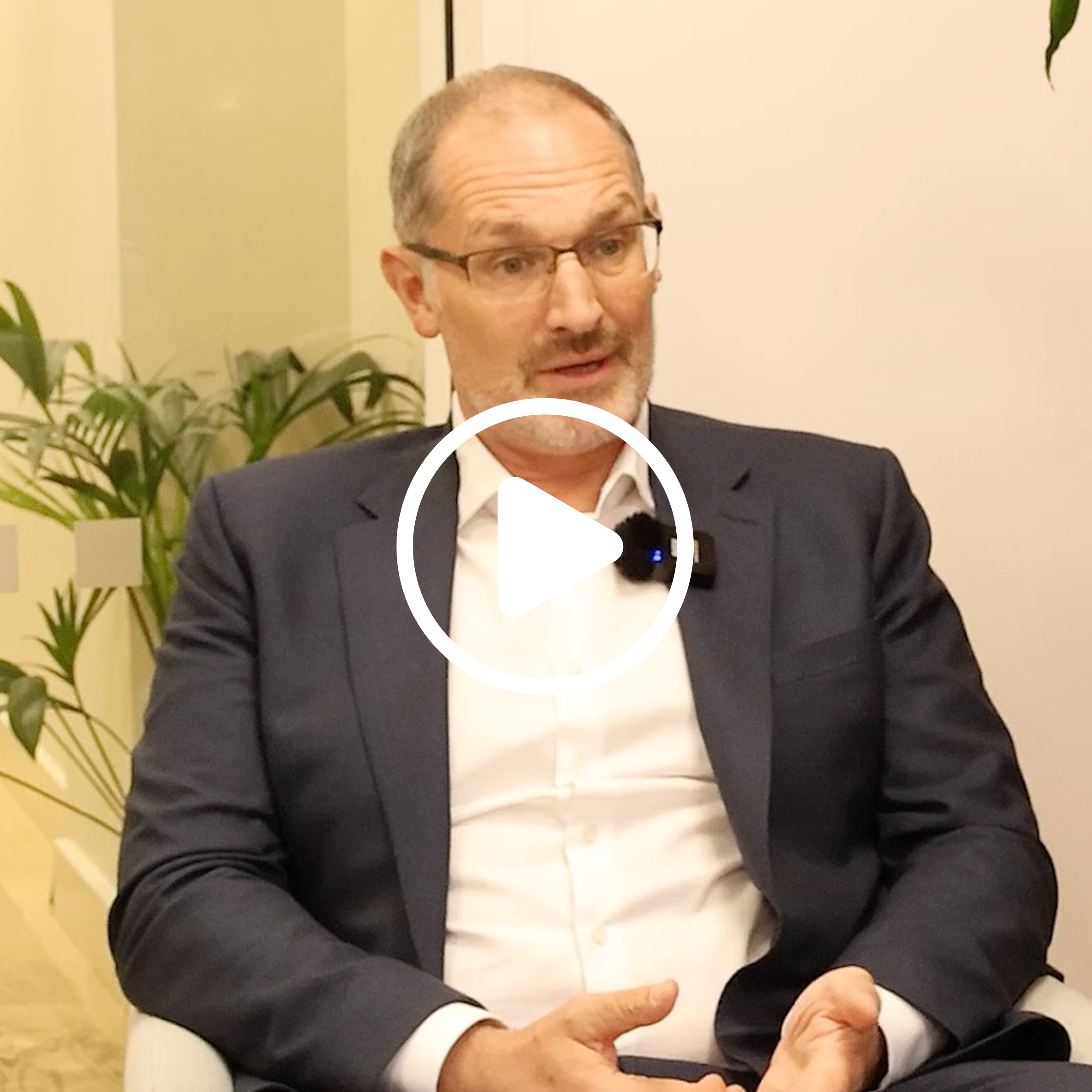
Conversations from SS&C Deliver: Bhagesh Malde, General Manager and Head of SS&C GlobeOp, speaks with Private Equity Wire® editor, Aftab Bose.
Bhagesh Malde has seen it all in the alternatives industry. Having established the hedge fund servicing practice at J.P. Morgan in the early noughties, and led the global private equity and real estate services at State Street, he now heads up global fund services (GlobeOp) at the biggest admin of them all, SS&C, with over $3tn in alternative assets under administration.
Speaking to Private Equity Wire® at SS&C’s flagship Deliver conference in Windsor on 12th May, Malde predicted retail involvement in private markets will continue to expand, despite the current news cycle. He says: “I don’t think the direction of travel is reversible.”
“There’s enough demand globally for private markets retail products, enough governmental push in certain countries to open up private markets to pension capital, and enough manager interest in accessing a new investor base. It’s not going back to the way it was. The question is one of just how long it takes to mature – and how much education happens along the way.”
Education, rather than structure, has been the central challenge of the current crisis in BDCs. Malde stresses that communication is strongly incumbent on the managers and advisors, and there will be lessons learned. Terminology changes are likely with “limited liquidity” or just plain “illiquid” being used to describe the products more clearly for investors and advisors.
“The fund documents were built to handle exactly this. But headlines bring pressure regardless. And some managers have realised the investor education should have happened much earlier, before the pressure arrived.”
As it stands, firms are deeply engaged with managing the redemption requests and proration mechanisms, which Malde says has created much higher volumes of work for his firm as a servicer. Remarkably, much of the workload also relates to funds looking to set up new retail-focused products – a strong signal that democratisation is here to stay.
“Interest in retail distribution is not being dampened by what’s happening right now – if anything, there’s demand from managers who are not yet in the space looking to get in. These products take a year or two to design and launch. Most people expect the current storm to subside. When investors realise the underlying assets are still worth something, the picture will look different,” he says.
The underlying assets
Malde raises an important point about the composition of assets and portfolios in these retail-focused products. In sharp focus at the moment is private credit, which appears to have developed a broadly problematic reputation in the public eye.
Two points to remember here, according to Malde: not all private credit is created equal, and that, at a fundamental level, private credit has a critical role to play in the real economy, financing worldwide, filling gaps that can’t be filled by banks and supporting growth in key areas.
“Private credit is attracting interest from both traditional private equity names and the hedge fund side. It’s become a global trend – we’re seeing people raising private credit funds in the US, in Europe, and in Asia. Credit is drawing capital from across the entire alternative investments landscape, and that’s quite a significant structural shift.
“Some private credit firms are going to lose money for their investors. But candidly, from a market perspective, that’s not a bad thing. If they’ve been irresponsible in where they’ve lent money, it’s not a bad thing that some of them aren’t going to make any money. That’s how markets self-correct,” he says.
Not all issues stem from irresponsibility. Malde adds: “some Private credit firms relaxed their lending criteria when the economy looked buoyant – just as banks always did. That’s not necessarily irresponsible, it’s just human behaviour at the institutional level. But private credit now needs to get more sophisticated about how economic conditions affect its risk profile. The lesson from this cycle is not all private credit firms have that sophistication.”
Structural adjustments
SS&C supports the industry with the structural elements critical to stability and flexibility in the current environment. Chief among these are hybrid fund structures, designed to match institutional-grade returns with a more attractive liquidity profile for the wealth and retail investor.
Malde says: “We treat nearly all of private credit like a hybrid fund, and we started doing that a few years ago, even for purely closed-end structures. The fund often comprises a combination of assets and instruments. We use best-of-breed technology from the hedge fund side of our business together with best-of-breed from the closed-end side, and bring them together through a dedicated team.”
Perhaps the biggest challenge with these fund structures, barring the obvious balancing act of liquidity management, is valuations. For a number of reasons, mega funds are pushing towards higher-frequency valuations for their retail-focused funds, an exercise that many might struggle to mirror.
According to Malde, there remains a sizeable gap between the theoretical and the practical when it comes to valuations. “How onerous will it be? How costly? What does that cost do to investor behaviour? And what are the implications for reliability? We work with clients today who do daily valuations, but they’re not in the illiquid space. The moment we bring illiquid assets into that model, the complexity changes fundamentally.
“Firms would need information from portfolio companies on a daily basis. They’d also be marking to public benchmarks or conducting independent assessments every single day. Think of the cost of doing that. It’s a massive operational undertaking, and the downstream impact on every asset in the portfolio would be significant.”
The adviser ecosystem, led by firms such as SS&C, will need to support these processes, and work in tandem with firms to evolve valuation and liquidity practices. One thing is for certain: the direction of travel is locked in.
“We remain committed to investing in the retail private markets servicing business because we see long-term strategic opportunity. Despite current challenges, if it’s done the right way, it’s a win-win. But the investors have to understand there is a real and meaningful difference in liquidity compared to other assets in their portfolio.”