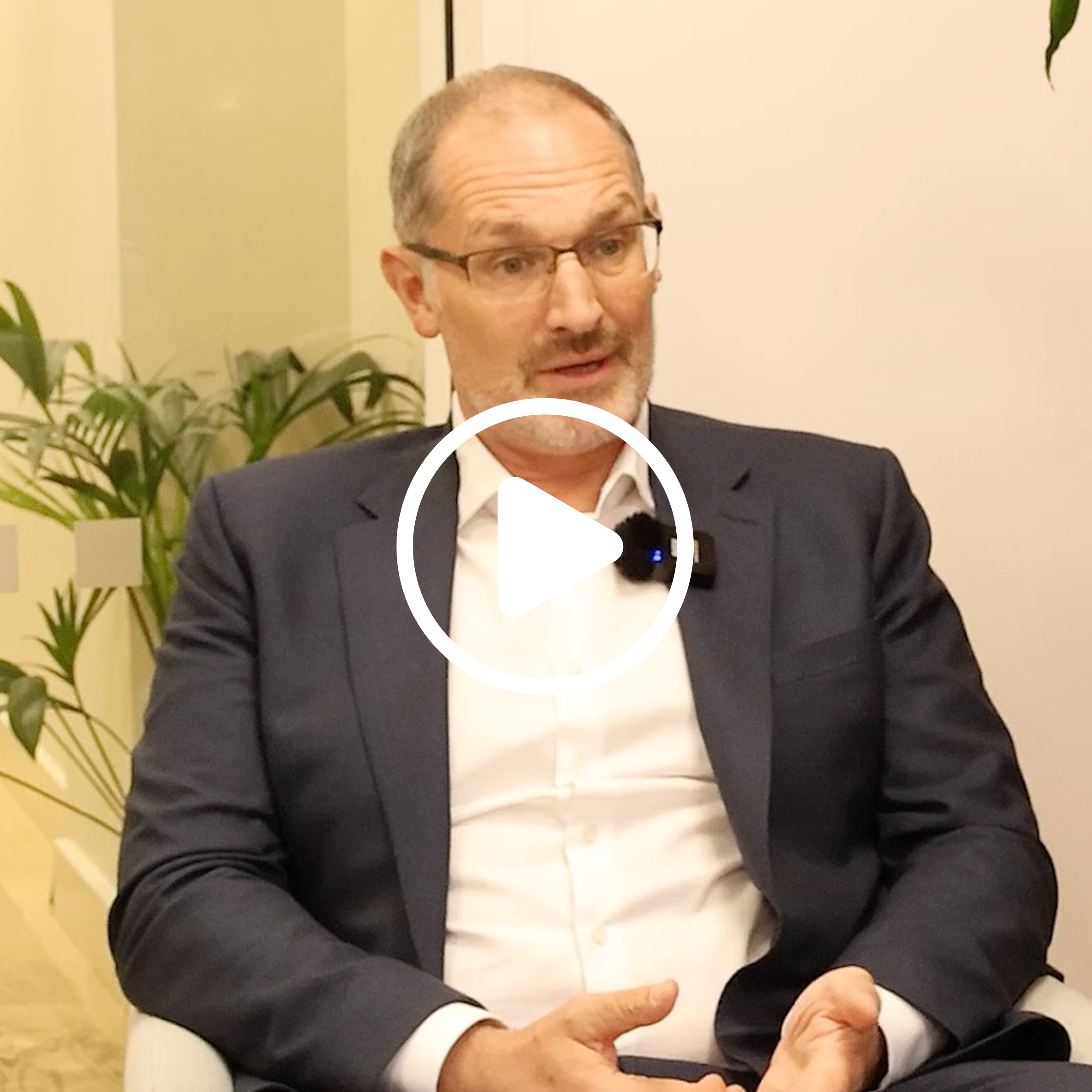
Krzysztof Krawczyk thinks the standard investment cycle risks leaving upside on the table.
By Jack Arrowsmith, London
By the early 2000s, Energis was in deep trouble.
The telecoms company had expanded aggressively since listing, and following the dotcom crash the pressure was starting to bite. By July 2002, it was placed into administration.
In 2004 its Polish division, Energis Polska, was bought out by private equity firm Innova Capital alongside the management team. One of the architects of that transaction was Krzysztof Krawczyk, who would go on to launch CVC’s new Poland office in 2015.
Despite the distressed nature of the asset, M&A in the sector quickly began to pick up again. “Days after closing the deal, I started getting calls from strategics,” he says.
For Innova, these offers were too good to turn down.
“We closed end of December, and signed the SPA to sell it in June next year, 6 months,” Krawczyk explains.
“We made 3x simply because the industry changed sentiment”.
While Innova was no longer committed, Krawczyk was curious about the long-term potential of the asset, and continued to monitor its performance years later, observing that there was still significant upside left to be captured.
“In the next four or five years, it tripled in value, which means that if we didn’t sell it and we kept it for five, six years… we would make nine times our money.”
Fear of missing out
This was a pattern Krawczyk continued to observe, where private equity firms were failing to maximise their returns by exiting assets prematurely.
“If you look back across the history of the industry, there’s been a lot of assets that actually have been continuously growing for more than just the fund’s life.”
He continues that closed-ended funds typically encourage firms to exit their trophy assets in order to provide proof of value to LPs, as a basis to justify fundraising. “Which companies are being sold first in order to raise the subsequent fund? Usually, the best companies.”
“It’s so difficult to find very good assets, that you just don’t want to get rid of them.”
Krawczyk would lead CVC’s Polish operation for 11 years after his time at Innova, and left the firm in March of this year. Now, he is going it alone.
Investing as an individual, Krawczyk says he is looking for companies where he can fully capture their value over the course of the holding period.
While that doesn’t necessarily mean longer hold periods – exits could feasibly occur on a shorter timescale if all the meaningful upside has been captured – it does make them much more likely.
The goal is to ensure that investment decisions are rooted in their underlying value, not the liquidity needs of LPs.
Doing this requires alignment at the outset. “I’m looking for investors that don’t have liquidity needs within three, four, five years, but they really want to maximise absolute return,” he says.
For capital, Krawczyk is using both his own personal resources, and high-net-worth individuals.
On the face of it, this strategy seems to be going against the direction of travel in private markets, towards increased liquidity driven by retail participation. But Krawczyk sees it as being entirely consistent. Once his operation reaches critical mass, he plans to provide investors with windows of liquidity, while encouraging them to remain committed until the full upside of the assets have been captured.
The difference in his approach is simply that the holding period will not be governed by the standard fund lifecycle.
The industry’s answer to the problem Krawczyk identifies has been GP-led continuation vehicles, which can provide LPs with the liquidity they need while allowing GPs to hold on to prize assets.
But this approach has not been without controversy. With managers sitting on both sides of the transaction, LPs have expressed concerns that the deals do not represent a fair price for the asset, leaving them short-changed on distributions.
Krawczyk says that without the constraints of fund lifecycles, his approach is free from the conflicts which can take place in continuation vehicles, providing a more favourable offer to LPs.
Without a pre-prepared timeline, the question then becomes when to exit. “As long as the strategy is providing outsized returns, we really want to stick around for that period of time,” he says.
Krawczyk cites the ‘rule of 40’ as one way in which these investments could be evaluated, where they are held provided that their revenue growth and EBITDA margin are greater than 40 per cent.
For a lot of companies, he believes a long-duration approach would better suit their interests, as it would likely help them avoid the disruption which can come from short-term ownership followed by a sale or listing.
“If I invest, [they] are not under pressure that after three or four years I will be pushing for exits.”
This appeal is why he thinks there is an addressable market. He says there are a lot of companies where “they would never let [PE firms] in because they don’t want to exit. They want to build a business over the next 20 years”.
From marketplaces to money
So far Krawczyk has chosen Dutch-based online marketplace G2A and Philippine digital bank Tonik as his first long-duration bets.
G2A is an online platform which resells video games and other digital items via their activation codes. Digital-first businesses have been the centre of concerns regarding disruption risk from AI.
That concern is presumably even more pronounced when holding for a much longer period, with the future so uncertain. Is this not a concern with G2A?
Krawczyk doesn’t think so: “both business models can benefit greatly from agentic AI.”
For online marketplaces like G2A, he argues that AI can be utilised to better understand and address customers’ needs. This could include decreasing the time to code new offerings and bring them to market, allowing online platforms to be more responsive to changing preferences.
The same is true, he says, in digital banking. For consumer finances, “if you apply AI, you can actually make more thoughtful risk assessment decisions.”
Krawczyk is by no means the first emerging manager to spinout from an established firm. As the dispersion of returns widens and outperformance is harder to come by, LPs are increasingly prioritising a strong track record and evidence of positive returns, regardless of the size of the operation.
As GPs struggle to exit their 2021 investments, managers need to provide reassurances to LPs that they are able to buck the trends which are disrupting private markets. Committing to longer hold periods could be one way to signal that confidence.