Tikehau Capital is one of France’s best-known and experienced investment management groups. For many years, Tikehau has pioneered the approach to private debt investing in Europe. With a team of over 25 professionals, it has built a private debt platform that structures a variety of financing deals, ranging anywhere between EUR10 million and EUR300 million, for European corporates in need of alternative sources of financing.
Currently, Tikehau has EUR12.6 billion of assets under management. This includes EUR2.3 billion in direct lending (European direct lending + corporate direct lending to French SMEs through the Novi 1 and Novo 2 funds) and EUR3.2 billion in floating rate leveraged loans (including CLOs), as it continues to support institutional investors in search of higher yielding investment opportunities, over and above their traditional fixed income portfolios.
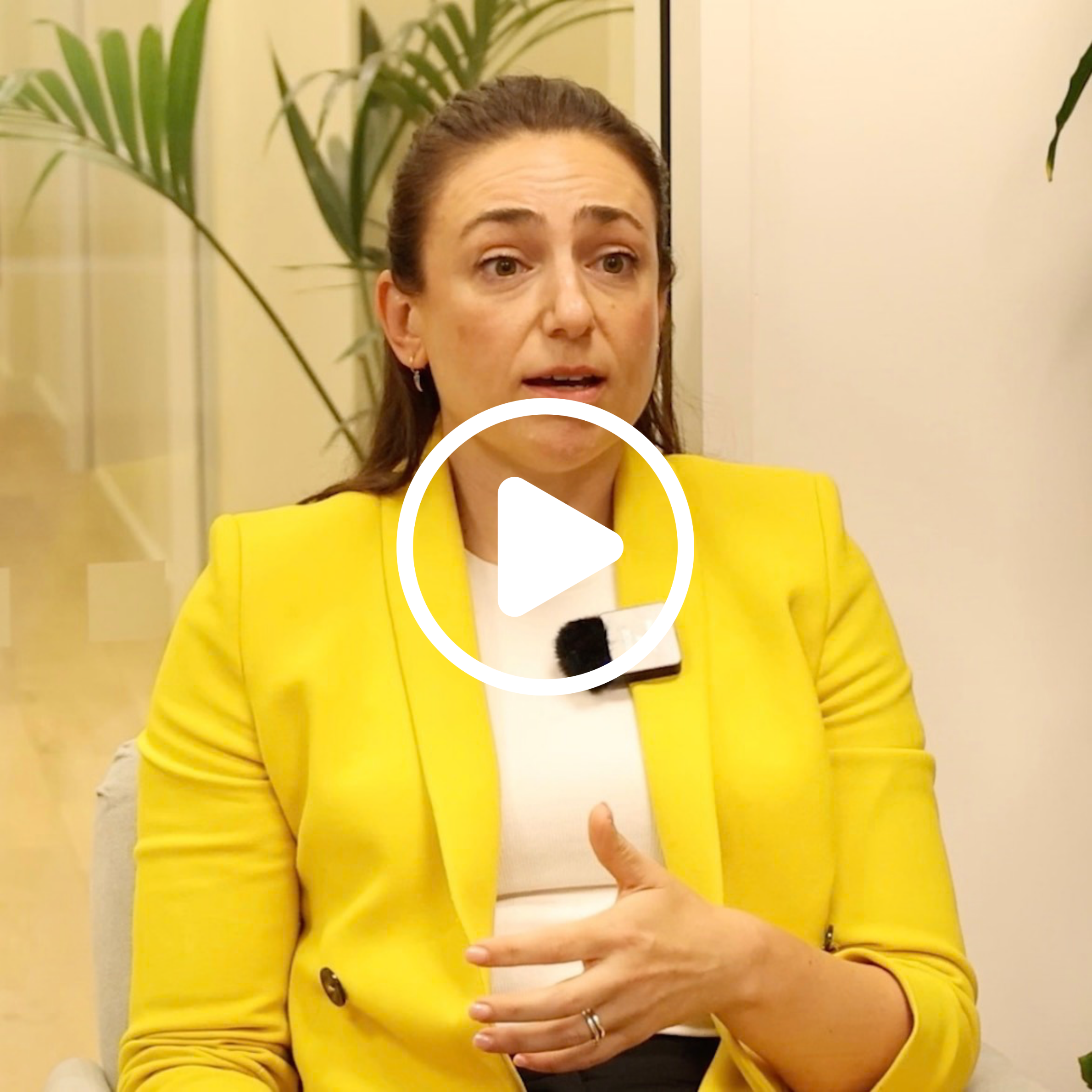
Cécile Mayer-Lévi (pictured) is involved in the private debt team at Tikehau Capital and will be discussing the evolution of the European private debt landscape at the forthcoming IPEM event (https://www.ipem-market.com) in Cannes, 24 to 25 January.
“Private debt is now becoming more a mainstream financing option for SMEs,” Mayer-Lévi tells Private Equity Wire. “It is a long-term trend and we specifically focus on three main areas on our platform.
“The first one is private placement financing. We have a number of funds which provide corporate financing and allow corporate CFOs to diversify their source of financing away from the banks.
“Secondly, we operate in the global syndicated market which is organized with CLOs and leveraged loan funds and managed accounts; these vehicles are driven by more liquid markets and involve sharing in syndicated loans with banks.
“Thirdly, we have a number of funds that we refer to as direct lending where we are acting as the arranger of the financing , as opposed to acting as a participant in a syndication loan.”
Europe’s private debt market has, in many ways, mirrored what has happened in the US over past decades where non-banking, institutional sources of financing have long prevailed. Around 70 to 80 per cent of corporate America is financed this way.
“This trend emerged in Europe, principally in the UK, following the financial crisis a decade ago, which led to a change in how banks operate (and provide finance).
“Direct lending has, over the years, developed quite strongly in the UK. However, in the context of the macro economy and the impact of Brexit, continental European countries have become much more dynamic.
“Whereas direct lending was perceived as very much a UK-centric market and had the largest market share, now I think France and to certain extent Germany and the Nordics are much more active,” postulates Mayer-Lévi.
Tikehau’s private debt business supports companies within a range of industry sectors. The common denominator when providing debt finance is that each company represents a key segment of the French economy, yet finds access to traditional bank funding challenging.
“We consider this business to be very local. You need to have people on the ground to source transactions efficiently. It is important we have direct access to companies and management teams,” says Mayer-Lévi, who adds that there are many criteria that must be considered before making a loan to an SME “as it is a bespoke financing arrangement”.
“It needs to be tailor made for each situation,” she says.
Mayer-Lévi says that the key to any successful private debt investment is to understand a company’s cash profile and then ensure that the amount of debt issued is properly sized for the future cash flow of that company.
“We are cash flow lenders so we need to understand the current business model and the past financial profile of the company in order in such a way that we have sufficient comfort over its long-term future.
“It is important to keep a cool head at all times when doing private debt investing. Ideally, you need to have been through a credit cycle to make sure you are not just driven by market liquidity,” remarks Mayer-Lévi.
Over the last 12 months, Mayer-Levi confirms that the team has invested more than EUR1 billion across the platform’s three main strategies: corporate lending, leveraged loans and private debt.
“We invested approximately 50 per cent each in leveraged loans and private debt in 2017, and were especially active in France and Benelux. We also did a couple of investments in Denmark and Norway. Investments in our funds are typically made using unitranche finance.
“Private debt provides attractive risk/returns and allocations are growing among institutions as they increase their knowledge of this asset class. Investors are more inclined to consider leveraged loans because of the higher returns they offer – typically these will be high single digit returns,” confirms Mayer-Lévi.
She says that the loans Tikehau makes are usually seven to eight years in length but in real life they run for four years. After all, direct lending is more expensive than bank loans.
“If the company is performing well we will consider re-financing after 18 months but if the company is doing okay, but not over performing – which ironically is the best scenario for us – then the loan will usually be in place for up to four years,” adds Mayer-Lévi.
In terms of how investors access the asset class, depending on the size of the investor they will ordinarily be comfortable allocating into a commingled fund. Larger institutions, however, might opt to have both commingled investments and their own segregated managed accounts, whilst those with the deepest pockets will often prefer to stick to the latter vehicle to avoid co-investment risk.
“There is a trend in the industry towards taking this approach among some of the large insurance companies. These are either discretionary managed accounts where the investor chooses which investments to make, or more advisory-based where the investor relies on the asset manager’s expertise; this is a more flexible approach where any investments on the platform could be used to build a customised mandate.
“We have a roughly 50/50 split of capital allocated on the platform to commingled funds and managed accounts,” confirms Mayer-Lévi.
Despite the level of competition being fierce, Mayer-Lévi says they already have an active pipeline for 2018.
“We are actively involved in a number of transactions, including on the leveraged loan side of the business where banks are syndicating loans in Spain, Italy, Benelux, Scandinavia. The continental European private debt market is quite dynamic,” she concludes.